
Case study — Joint reinstatement & concrete polishing
Joint reinstatement and polished concrete restoration
Project overview
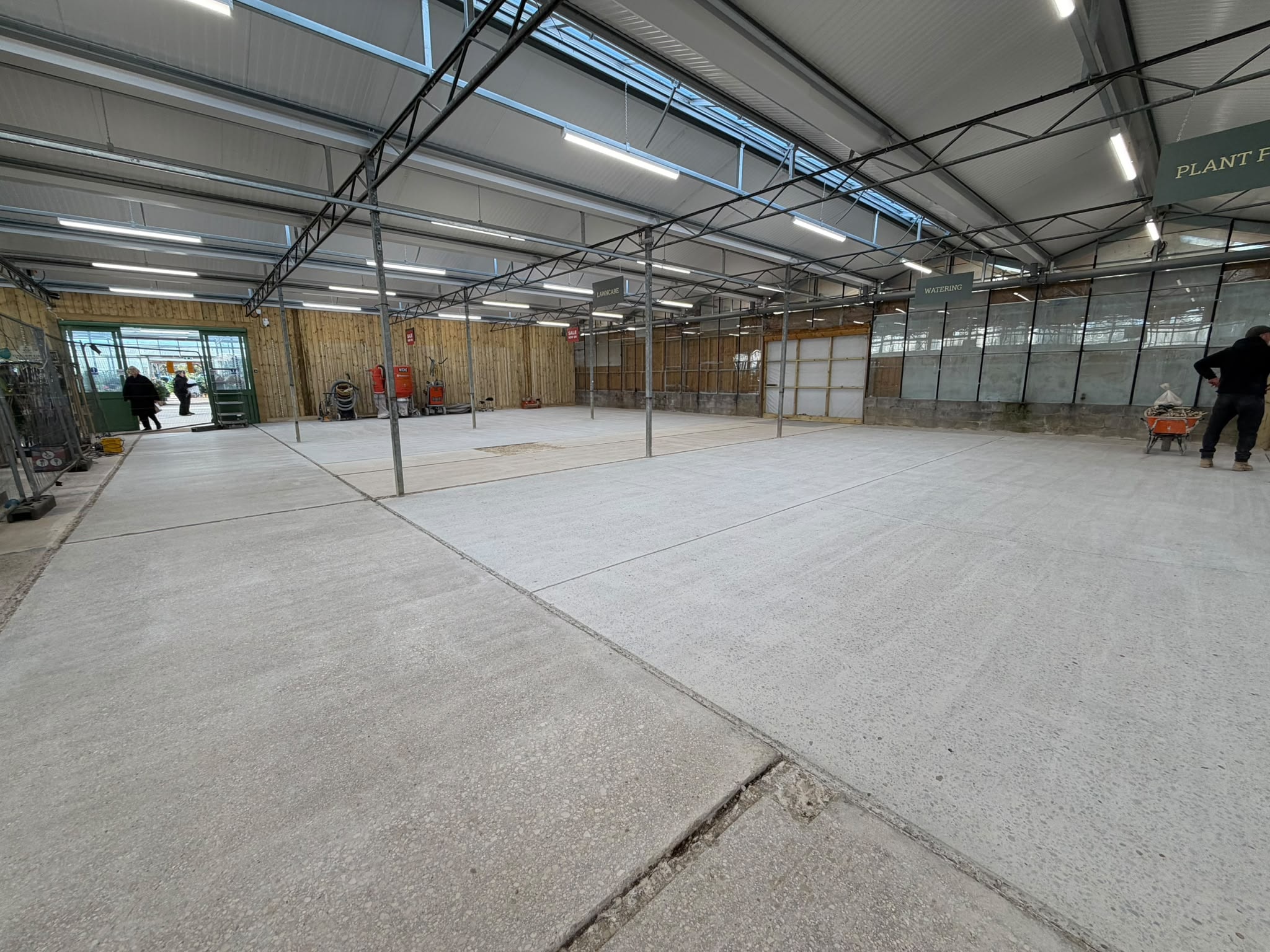
Failed movement joints. Polished surface to match. Live facility throughout.
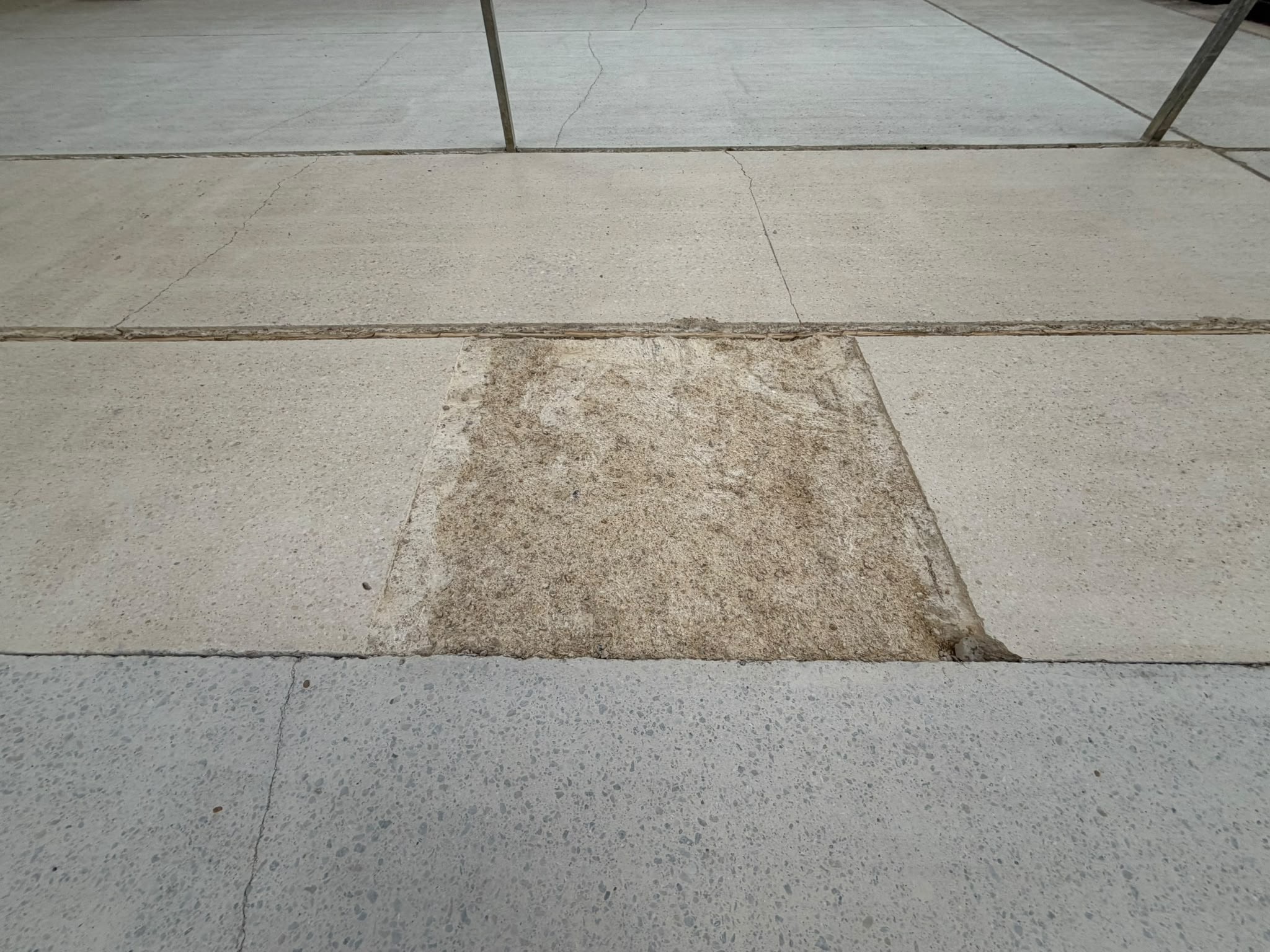
Movement joints in polished concrete floors take significant punishment under forklift traffic. When the filler material breaks down, the joint edges chip and spall, creating trip hazards, allowing moisture beneath the slab, and leaving an uneven surface that accelerates further deterioration.
This West Midlands commercial facility had extensive joint deterioration across its main circulation routes. The client needed the joints reinstated to a specification that would hold under continued forklift loading — and the polished surface restored to a consistent finish across the full floor.
Works were sequenced bay by bay to keep the facility operational throughout. Each bay was handed back before the next was started, with no requirement to close the building or suspend operations.
Project facts
- Works type
- Joint reinstatement & re-polishing
- Resin system
- Semi-rigid polyurethane
- Polish finish
- 400-grit
- Sector
- Commercial / industrial
- Location
- West Midlands
- Programme
- Live facility, bay by bay
The challenge
What made this project technically demanding
- Extensive joint deterioration across high-traffic forklift circulation routes, with failed material creating trip hazards and allowing moisture ingress beneath the slab
- Existing polished surface required matching after joint repairs — re-polishing had to blend seamlessly with the surrounding floor rather than leaving visible repair patches
- Semi-rigid resin specification required: too rigid and the joint cracks under dynamic forklift loading; too flexible and it deforms under static loads
- Occupied facility with live operations — works were sequenced bay by bay to keep circulation routes open throughout
- Varying joint widths and depths across the floor required different resin volumes and curing times to achieve a consistent flush finish
How we did it
The process, step by step
Joint reinstatement and re-polishing are interdependent — the quality of the joint repair determines whether the polished finish can be made continuous. Every step feeds the next.
01
Joint survey & condition mapping
Before any cutting began, we walked the full floor and mapped every joint — recording width, depth, condition and traffic loading at each location. This gave us a joint-by-joint specification for resin type, volume and curing sequence, rather than a single programme applied uniformly across the floor.
02
Failed joint removal
Deteriorated joint filler was cut out using angle grinders and oscillating tools, removing all failed material back to sound concrete on both faces. Edges were cleaned and vacuumed to remove dust and debris before priming — contamination at this stage is the most common cause of resin adhesion failure.
03
Semi-rigid polyurethane resin installation
We applied a semi-rigid polyurethane resin system rated for industrial wheeled traffic. Semi-rigid is the correct specification for joints under forklift loading: it accommodates the micro-movement of the slab under dynamic loads without cracking, while remaining stiff enough to support the wheel as it crosses the joint.
04
Grinding flush & surface preparation
Once the resin had fully cured, joints were ground flush with the surrounding slab using hand-held angle grinders and planetary machines. Any resin proud of the surface was removed progressively to avoid undercutting the joint edges. The entire floor was then prepared for re-polishing.
05
Re-polishing to 400-grit
The full floor was re-polished through a multi-stage diamond sequence to a consistent 400-grit finish. The polishing sequence was calibrated to match the existing surface reflectivity — the repaired joints are not visible in the finished floor.
06
Densification & handover
A lithium silicate densifier was applied across the full floor to harden the surface and reduce porosity before final polishing passes. The completed floor was handed over with a maintenance guide covering in-house cleaning and periodic re-densification.
The outcome
Safe for forklift traffic. Consistent polished finish. No operational downtime.
The reinstated joints are flush, fully bonded and rated for continued forklift loading. The semi-rigid resin system accommodates slab micro-movement without cracking — the most common failure mode of hard epoxy joint fillers in dynamic-load environments.
The re-polished surface is consistent across the full floor. The repaired joints are not visible in the finished finish — the floor reads as a single continuous surface rather than a patchwork of repairs.
The facility remained operational throughout. No bays were closed simultaneously, and the client reported no disruption to circulation or operations during the works.
Got failing joints or a deteriorating polished floor?
We carry out joint reinstatement and concrete restoration across the West Midlands and UK. Get in touch to discuss your floor.